

Rep. Tesa Schwans, a first-term Republican from House District 9 (northwest Sioux Falls, Hartford and Wall Lake), sits down with Dave Roetman at the Makers Exchange in Tea in November 2025. A cosmetologist and longtime salon owner who serves on the House Commerce and Energy and Education committees, she talks about her summer on the Teacher Compensation Review Board and the Teacher Apprenticeship Pathway led by Dr. David De Jong at Dakota State University, her 2025 law letting salon workers share booth space (HB 1232), and her plans to update the state’s cosmetology laws and make license reciprocity easier for stylists who move to South Dakota. She explains how years behind the chair led to her focus on mental health, addiction and prevention, her visit to Brighter Transitions and Falls Academy, and the Encompassing Youth Forum, where superintendents raised concerns about the 2015 juvenile justice law, SB 73. She also walks through Gov. Larry Rhoden’s decision to opt in to the new federal scholarship tax credit, worth up to $1,700 per donor starting in January 2027, and her seat on the Correctional Rehabilitation Task Force, and closes with a call for redemption and for conservatives to stand together.
Topics: Teacher Compensation Review Board, Teacher Apprenticeship Pathway, salon booth sharing (HB 1232), cosmetology licensing and reciprocity, mental health and addiction prevention, Brighter Transitions and Falls Academy, Encompassing Youth Forum, SB 70 and SB 73, federal scholarship tax credit, school choice, Correctional Rehabilitation Task Force, redemption and reentry
“Who of us deserves redemption? And who are we to judge who deserves redemption? And so what is it that we can do to help these broken men that have done some bad things?” - Tesa Schwans
Show notes
Published Nov. 18, 2025. Recorded in November 2025 at the Makers Exchange in Tea, a shop that sells goods from more than 100 local businesses, a few days after Gov. Larry Rhoden opted South Dakota in to the federal scholarship tax credit (Nov. 14, 2025).
Guest
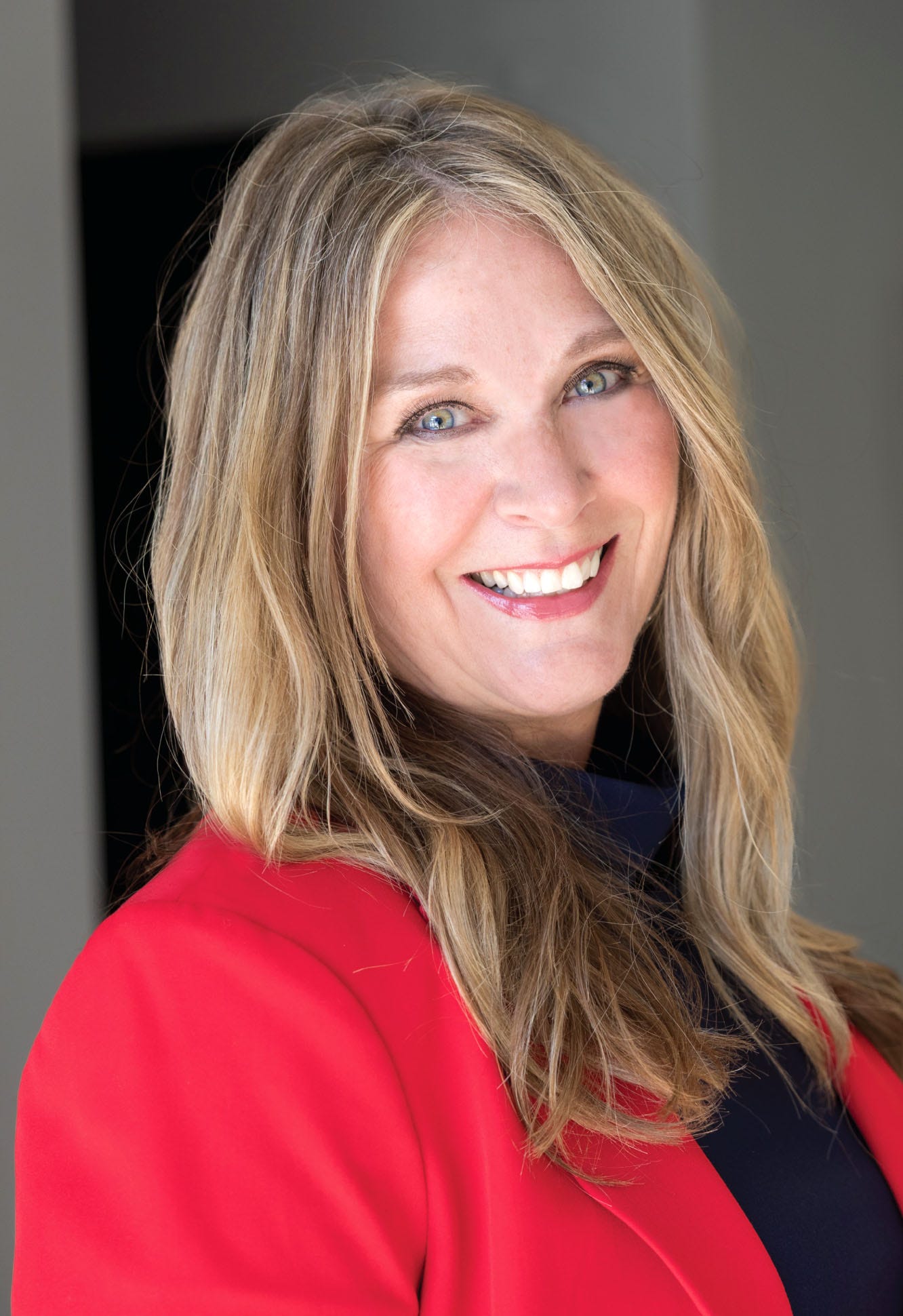
Tesa Schwans (R) represents District 9, which covers northwest Sioux Falls, Hartford and Wall Lake, in the South Dakota House. She was elected in 2024 and took office in January 2025. She is a licensed cosmetologist, a longtime salon owner in Sioux Falls and a regional sales representative, and she serves on the House Commerce and Energy and Education committees (SD Legislature; tesaforsd.com).
Background
The Teacher Compensation Review Board met three times in summer 2025 (June 16, July 28 and Aug. 20), with Schwans as a member. Its final recommendations were to leave unchanged the minimum teacher salary and average compensation targets set in 2024, to have the Department of Education expand training on handling student behavior, to collect one-time data on class time lost to athletics and activities, and to write a white paper on smartphones in schools (2025 TCRB report; DOE responses).
The Teacher Apprenticeship Pathway, launched in fall 2023, lets paraprofessionals (teacher’s aides) earn a bachelor’s degree and teaching certificate in about two years while they keep working in their own school district. Dakota State University teaches the elementary and special education track and Northern State the secondary track, and apprentices pay about $1,000 a year. Dr. David De Jong is DSU’s dean of education and director of teacher apprenticeships (DSU; SD Department of Education).
House Bill 1232 (2025), Schwans’ booth-sharing bill, changed the rules for salons and booths. It was signed by the governor on March 31, 2025 (SD Legislature).
Brighter Transitions Youth Treatment Center and Falls Academy share a licensed group care campus near Sioux Falls for youth ages 13 to 17 (SD Department of Social Services license).
The Encompassing Youth Reform Conference was held in Sioux Falls on July 7, 2025, hosted by Reps. Schwans, Bethany Soye, Heather Baxter and Novstrup and Sen. Joy Hohn. According to Schwans’ write-up for the South Dakota Republican Party (July 13, 2025), 33 legislators, seven superintendents and nine youth facilities took part, and the superintendents spoke about the impact of SB 73.
SB 70, the Public Safety Improvement Act, passed in 2013 and moved many nonviolent offenders from prison to probation, drug courts and treatment. SB 73, the Juvenile Justice Public Safety Improvement Act, applied a similar approach to juveniles in 2015. Schwans recalls them as about five years old; they are older than that (SB 73 executive summary, SD Boards and Commissions).
The federal scholarship tax credit comes from the One Big Beautiful Bill Act. Under it, a taxpayer can give up to $1,700 a year ($3,400 for a joint return) to an approved scholarship-granting organization and take a dollar-for-dollar, nonrefundable federal tax credit, starting Jan. 1, 2027, in states that opt in. Gov. Rhoden opted South Dakota in on Nov. 14, 2025 (Office of the Governor; IRS).
Gov. Rhoden created the 30-member Correctional Rehabilitation Task Force by executive order after the Sept. 23, 2025, special session approved the new men’s prison in Sioux Falls. Schwans and Sen. Hohn are members, and Lt. Gov. Tony Venhuizen chairs it. Its first meeting was Oct. 29, 2025, in Sioux Falls (Unified Judicial System; Dakota News Now).
Update (November 2026)
Cosmetology reciprocity: House Bill 1194, with Schwans as prime sponsor, lets the Cosmetology Commission credit work experience toward the education hours required of some out-of-state applicants, the idea she describes in this interview. It passed the House 64-1 and the Senate 30-3 and was signed by Gov. Rhoden on March 30, 2026 (SD Legislature).
Schwans’ other 2026 cosmetology bills did not pass. House Bill 1165, to create basic and advanced esthetics licenses and revise the cosmetology licensing chapter, failed in the House 27-38 on Feb. 11, 2026. House Bill 1063, on natural hair braiding, was sent to the 41st day (killed) by House Commerce and Energy on Jan. 21, 2026 (SD Legislature).
Juvenile facilities: Senate Bill 220, with Sen. Hohn and Schwans as prime sponsors, would have paid for a full study of the state’s juvenile correctional and residential facilities. It passed the Senate 24-9 but failed in the House 30-37 on March 4, 2026 (SD Legislature).
Charter schools: Senate Bill 218, with Schwans as the House prime sponsor, failed in the Senate on a 17-17 vote on Feb. 19, 2026 (SD Legislature).
The scholarship tax credit: South Dakota is on the IRS list of states taking part in the federal scholarship tax credit for 2027, so the credit is available to South Dakota donors starting Jan. 1, 2027 (IRS).
The Correctional Rehabilitation Task Force adopted 34 recommendations on Oct. 29, 2026, including starting rehabilitation programs when an inmate arrives rather than near release, more literacy, GED and technical school programs, and about $1.92 million a year for staff pay, peer support for people leaving prison, a landlord fund and transportation help. Its final report is due at its Nov. 30 meeting and will go to the 2027 Legislature (South Dakota Searchlight; SDPB).
The Teacher Apprenticeship Pathway is taking a fifth group of apprentices. Applications close Nov. 10, 2026, and classes begin in January 2027 (SD Department of Education).
Links
SD Legislature: Representative Tesa Schwans (2026, bills and committees): https://sdlegislature.gov/Legislators/Profile/4818/Detail
SD Legislature: Representative Tesa Schwans (2025, bills and committees): https://sdlegislature.gov/Legislators/Profile/4717/Detail
Tesa Schwans: About Tesa: https://www.tesaforsd.com/bio/
Makers Exchange, Tea: https://makers-exchange.com/
SD Boards and Commissions: 2025 Teacher Compensation Review Board report: https://boardsandcommissions.sd.gov/bcuploads/PublicDocs/Final%202025%20TCRB%20Report.pdf
SD Boards and Commissions: Department of Education responses to the 2025 TCRB recommendations: https://boardsandcommissions.sd.gov/bcuploads/PublicDocs/DOE%20Recommendations%20Report.pdf
SD Department of Education: Teacher Apprenticeship Pathway: https://doe.sd.gov/oatq/TAP.aspx
Dakota State University: Teacher Apprenticeship Pathway: https://dsu.edu/programs/Teacher-Apprenticeship-Pathway-Program.html
SD Legislature: 2025 House Bill 1232 (salons and booths): https://sdlegislature.gov/Session/Bill/26241
SD Department of Social Services: Brighter Transition Youth Center/Falls Academy license: https://dss.sd.gov/docs/childprotection/facilitylicensing/BRIGHTER_TRANSITION_YOUTH_TREATMENT_CENTER/BTYTC_2022.pdf
SD Boards and Commissions: Juvenile Justice Public Safety Improvement Act (SB 73) executive summary: https://boardsandcommissions.sd.gov/bcuploads/PublicDocs/Executive%20Summary.pdf
Office of the Governor: Gov. Rhoden opts in to President Trump’s school choice initiative (Nov. 14, 2025): https://news.sd.gov/news?id=news_kb_article_view&sys_id=d8db85984799b290a497127ba26d43a7
IRS: Federal Scholarship Tax Credit, participating states: https://www.irs.gov/government-entities/federal-state-local-governments/federal-scholarship-tax-credit-fstc-participating-states
SD Unified Judicial System: Gov. Rhoden announces Correctional Rehabilitation Task Force members (Oct. 7, 2025): https://ujs.sd.gov/ujs-news/gov-rhoden-announces-correctional-rehabilitation-task-force-members/
KELOLAND News: Correctional Rehabilitation Task Force set for 1st meeting (video): https://youtu.be/64qiNCJoFec
Dakota News Now: DOC talks reentry initiative with new rehabilitation task force (Oct. 30, 2025): https://www.dakotanewsnow.com/2025/10/30/doc-talks-reentry-initiative-with-new-rehabilitation-task-force/
SD Legislature: 2026 House Bill 1194 (out-of-state work experience for cosmetology licenses): https://sdlegislature.gov/Session/Bill/26648
SD Legislature: 2026 House Bill 1165 (esthetics licenses): https://sdlegislature.gov/Session/Bill/26416
SD Legislature: 2026 House Bill 1063 (natural hair braiding): https://sdlegislature.gov/Session/Bill/26497
SD Legislature: 2026 Senate Bill 220 (juvenile facilities study): https://sdlegislature.gov/Session/Bill/27229
SD Legislature: 2026 Senate Bill 218 (charter schools): https://sdlegislature.gov/Session/Bill/26311
South Dakota Searchlight: Rehabilitation, reduction in repeat offenses will require ongoing investment, task force says (Oct. 29, 2026): https://southdakotasearchlight.com/2026/10/29/rehabilitation-reduction-in-repeat-offenses-will-require-ongoing-investment-task-force-says/
SDPB: ‘Yearslong process’ to reduce state’s recidivism rate requires money, culture changes (Oct. 30, 2026): https://www.sdpb.org/politics/2026-10-30/yearslong-process-to-reduce-states-recidivism-rate-requires-money-culture-changes
Full transcript
About this transcript: It was machine-transcribed in-house and then edited for readability. Filler words and false starts are removed, and the meaning is unchanged. [?] marks a word or phrase we’re unsure of. Timestamps are approximate and match the clean edit of the episode audio.
[00:07]
Dave Roetman: This is the Making Waves podcast. My name is Dave Roetman. We’re here with Tesa Schwans, District 9 representative. Welcome, Tesa.
Tesa Schwans: All right, thank you. Thank you so much for having me today. I really appreciate being here.
Dave Roetman: We’re at the Makers Exchange in Tea. This is kind of a cool place.
Tesa Schwans: Yes, I love to shop here.
Dave Roetman: It’s got a lot of good stuff. Good food and a lot of little businesses where they exchange a lot of local products.
Tesa Schwans: Yep, and I love my small businesses, so I definitely love coming here. Awesome.
Dave Roetman: Tell us what committees you’re on.
Tesa Schwans: Right now I currently serve on the Commerce and Energy Committee and the Education Committee.
Dave Roetman: All right. And any other committees you’ve been serving on, or interim?
Tesa Schwans: Over the summer, I was asked to be on the Teacher Compensation Review Board and do some studies reviewing teachers and their pay schedule, how they’re paid, where the teachers are seeing the biggest losses in K through 12, and where they’re losing the most teachers, and what we can do to research the data and statistics that are leading to some of these teachers leaving the industry.
Dave Roetman: Could you dig down on that a little bit? What recommendations have you made? What did you find out?
Tesa Schwans: We had three meetings over the summer. Some of the recommendations that were made were just to look at some of the salary metrics, some of the formulas for the teacher salary and the average compensation, to expand opportunities for teachers’ professional development, and to look at the apprenticeship programs that Dr. De Jong is doing out of DSU, all of the strides that they’ve been making in that part of the program to get more teachers on board that don’t want a traditional four-year route of becoming a teacher. So it’s been really inspirational to see his programs. So that was really great. That’s fascinating.
Dave Roetman: My mom used to teach a little bit, and so did one of my aunts. And back in the day, you graduate from high school, and then you go to a finishing school, which is basically two years where they taught you how to teach. But theoretically speaking, you have 12 years of education. There’s no reason why somebody with 12 years of education, a high school graduate, can’t teach eighth graders.
Tesa Schwans: Yes. And what I understand from the apprentice program is that they allow them to work part-time, and then as they’re working part-time, they get to work towards their degree. And by the time they’re done with their degree, by doing this apprenticeship program, they’re then able to get hired on by the district that they were already working with. So what it does is it creates some stability to the areas that they live in, and it helps get the need met within those areas that were already losing some of the teachers in that field. And it’s been very positive.
Dave Roetman: I’m going to speculate here. I’m going to guess that you get teachers that don’t have all this student debt load either, right?
Tesa Schwans: Correct. Yep. And so it’s a win-win for both. So you have somebody that comes into the industry wanting to teach, very passionate. Not that, you know, out of a four-year, you’re not, because of course you are, but people that cannot take the traditional four-year route because of other circumstances that have come up in their lives, this has been a great opportunity for them to get into the profession on a different track. So that’s been really great.
Dave Roetman: That sounds very innovative. What kind of bills are you bringing in the next legislative session?
Tesa Schwans: That’s a very good question. Being a cosmetologist and a small business owner, there is a series of bills that I want to bring forward this next legislative session. Just to back up a little bit, last session I brought House Bill 1232, and it was a bill that was really geared towards sharing your booth space in a salon setting. So for example, if you have a station in the salon and you work a certain amount of hours, and you wanted to have somebody else come in and work the opposite hours that you are, you can now do that. That is written in law, that you do have the ability to share your workspace without having to have extra square footage that you have to add, or any type of extra plumbing that you need to add in with that extra square footage, in with that extra space. So it was really a right-to-work issue, and being able to share that space, and be able to have people that wanted to work on a part-time basis be able to have that opportunity as well, to share that space and to share that expense. So it was a big win.
Dave Roetman: That’s really great, but I’m sitting here a little bit boggled. Wasn’t that allowed in the first place? Was that always the case?
Tesa Schwans: Well, and interesting enough, it was something that was happening, but the way that some of the laws were written, it was written to where the understanding and the interpretation was that you had to add more square footage in order to do that. And we just think that it wasn’t necessarily something that we needed to do. It was something that we really already had the right to do; we just needed to reiterate that.
[05:14]
Dave Roetman: Okay, win for freedom.
Tesa Schwans: Yes, win for freedom, absolutely.
Dave Roetman: Okay, what other bills have you passed, or what are you going to address here in the future?
Tesa Schwans: A lot of the bills that I’ll be bringing forward will really have to do with cosmetology, just because the laws and regulations that have been written in that part of our codified law really need a lot of work. I mean, they really haven’t been updated since 1974. And so some of the laws and rules and promulgated rules are just a little outdated, so we just need to update some of the rules and regulations that are following in those parameters. So for example, reciprocity: the ability to move here from one state to another and be able to have the right to work right away, and having the hours, making sure that the hours are crossing over, making sure that the licenses that were coming from other states, that they’re able to transfer here and do it in a way that’s going to be more streamlined and is more easily accessible. And that really comes on the heels of some issues that we had had facing some reciprocity issues this last year. So we really want to make sure that it’s streamlined, it’s clear, it’s concise, and it’s very direct on what the intentions are for when you come to work in South Dakota and having reciprocity.
Dave Roetman: Yeah, get the government out of the way so people can work and make a living.
Tesa Schwans: Yes, yes. And another thing I’d love to do with that is make sure that the work hours experience that you’ve had in other states, if you were licensed and you’re moving to our state, that some of those work hours can be utilized into reciprocity hours.
Dave Roetman: What are you really passionate about as a legislator? What do you really want to dig into?
Tesa Schwans: This has been such a great experience, to really lean into where your heart really feels that you’re able to make the biggest and most significant changes. Being in the cosmetology world, it’s not just about doing hair and having somebody sitting in your chair. It’s about that contact. It’s about the connection that you feel with your client. And doing hair, honestly, kind of helps build you up for a lot of communication and dealings with people on the emotional level, on a psychological level, on a spiritual level. And so you really get to have a deeper connection with those people that sit in your chair, which has led me to a deeper passion, which I knew I always had, but never really knew how to get into without a four-year degree, and that’s dealing with mental health and addiction and prevention, and what it looks like in our society on a daily schedule. Like, what does that look like? Part of my passion is looking at the preventative side of it. What can we do as a society to look at the prevention agencies that we have in South Dakota right now? How can we help create some awareness to that, so that we can help the next generation to have more grounded family structures and family values that are going to really help preserve and protect the unit of the family?
Dave Roetman: The foundation of societies are families.
Tesa Schwans: Yes, yes, and I definitely agree with that. I think that the addiction rates across the state, when you look at the amounts of incarcerations and potential incarcerations that could happen, the upticks with addiction pretty much go hand in hand with that in a lot of cases.
Dave Roetman: I think that’s not even in question anymore.
Tesa Schwans: Yeah. And so, you know, what comes first? Does addiction come first and then mental health, or does mental health come first and then addiction? So they kind of go hand in hand. And so over the summer, I decided to do my own deeper dive into a facility that’s in my district, which is in District 9, and it’s called Brighter Transitions and Falls Academy. And they are a preventative care facility that has Department of Corrections kids, and it also has DSS kids, all on the same campus. And so after talking to the executive director out there, it really sparked my interest in doing a deeper study into what we can do as elected officials to help create awareness of this situation and issue that we’re facing in the state of South Dakota.
Dave Roetman: Do you think this is going to lead to policy changes or maybe some bills that you might bring?
Tesa Schwans: I think it could potentially lead to some policy changes. Over the summer, we helped to encourage the Encompassing Youth Forum, which myself, Senator Hohn, Representative Baxter, Representative Soye, Representative Novstrup and myself all kind of got together and helped create, this Encompassing Youth Forum. And it was pretty evident that some of the issues that we’re looking at is some legislation on SB 70 and SB 73. It has to do a lot with juvenile reform. So there could possibly be some legislation that could come across the House or the Senate this next session that could start dealing with some of the inconsistencies that we have within that.
[10:43]
Dave Roetman: SB 70 keeps coming up. Could you, just for the sake of our listeners, briefly talk about SB 70 and what that is and how it’s relevant?
Tesa Schwans: Yes. SB 70 is legislation that was brought, I want to say, about five years ago, so it was before I was really paying attention to a lot of this. And from my understanding, it’s legislation that was brought forward. The SB 70 is more for the adult level, and the SB 73 is more for the juvenile level. And it was created to put certain parameters in place to be a little bit more gentle on crime. It was promising...
Dave Roetman: If I recall, reduced incarceration, because they’re going to reform the system a little bit, and they’re going to help with addiction treatment and all kinds of things, trying to resolve issues before putting people in prison.
Tesa Schwans: Right.
Dave Roetman: And it’s not really had the effect that they intended.
Tesa Schwans: Right. And so what they’re finding is that the inconsistencies of being able to get them help sooner than later is part of the problem. So what happens is then the crime escalates, and it gets a little bit more intense, so by the time they get a handle on it, they’re already on the trajectory for incarceration. As far as getting legislation across the desk, there’s going to be somebody that’s way better than me that’s going to bring the legislation to address some of this.
Dave Roetman: I’ve heard SB 70 come up often enough to think that a lot of legislators realize that something needs to be done to make some changes to it.
Tesa Schwans: Yes. And I think SB 73 is the other one as well, which during our Encompassing Youth Forum, it was brought up actually by the superintendents, and some of the superintendents expressed their concerns about SB 73 and what it’s doing to the uptick of behavioral issues in our schools.
Dave Roetman: It’s leaving a lot of superintendents, the school administrators, to deal with issues and problem students and crime that justice is not dealing with. Right. And there’s a lot told in the back [?].
Tesa Schwans: Yes.
Dave Roetman: And nothing’s told about that [?], understandably.
Tesa Schwans: Yes, and that’s exactly right. From our understanding through the superintendents, it was that they want to do their part and they want to do their best, but again, it’s very hard to split your attention when you’re trying to focus on education and then now you’re having to focus a lot on behavioral issues and emotional instability. And that kind of led a little bit to my Teacher Compensation Review Board this summer, and that was a little bit of the questioning that we had in the Teacher Compensation Review Board, which is: how can we address some of the behavioral issues? Are the behavioral issues some of the reasons why the teachers are leaving, or is it because of the pay structure? Those were some of the recommendations, that they needed to find out through the Department of Education, to do some deeper research and find out what those recommendations look like.
Dave Roetman: Obviously something needs to be done. I understand that in the news, there’s something that the federal government has done and the state government has discussed about scholarships. Tell us about that.
Tesa Schwans: Yes. President Trump recently got the Big Beautiful Bill passed through the House and through the Senate. Part of this is that individuals can donate to scholarship organizations instead of paying more taxes to the federal government. So that’s really a huge win for our taxpayers and for our schools.
Dave Roetman: Could you go over that just a little bit? So in other words, instead of paying federal income taxes, you can give your money to a local scholarship fund and get that deducted from your taxes?
Tesa Schwans: Yes, yes. So it was just brought across the desk of Governor Rhoden on November 14th of this month that he has opted into that program, that donors in South Dakota are able to give $1,700 to the approved scholarship organizations for a 100% non-refundable tax credit. This will start in January of 2027.
Dave Roetman: That is awesome. Yeah. I much prefer that the money go directly to a program than go through Washington, D.C., bureaucrats.
Tesa Schwans: Absolutely. And the fact that you as a taxpayer get that as a credit on your taxes is a win for everybody. So it’s a win for school choice, and it’s a win for you as a taxpayer to get a credit.
[15:02]
Dave Roetman: And we’ll put a link to that in this post so that people can see it for themselves, and it’s going to be in 2027.
Tesa Schwans: Yep, it says January 2027. This money will fund scholarships for families to use on a variety of educational purposes, and it will help them and support them as they discover what opportunities are going to work best for their kids.
Dave Roetman: Wow, so thank you to Governor Rhoden.
Tesa Schwans: Yes, and a big thank you to President Trump on that as well. Of course.
Dave Roetman: You were also on the task force for rehabilitation of prisoners.
Tesa Schwans: Yes, yes, I was actually selected. I am one of 30 that were selected for the Correctional Rehabilitation Task Force. We had our first meeting in November, so it was a really interesting dynamic to the meeting, with 30 people sitting and listening. That’s a large committee, listening to the ideas and recommendations that we could potentially push forward as we’re seeking new pathways to reform, reentry and preventative care for the incarcerated.
Dave Roetman: I think it’s important that we take on this issue, because right now our system is failing.
Tesa Schwans: Yes. Yes. And earlier, when I was talking about the preventative care aspect to it, it’s so multifaceted, that you have the prevention care aspect, you have the reform care, which includes part of prevention, but it also includes reform within the institutions itself.
Dave Roetman: Yes.
Tesa Schwans: And it also includes reentry programs, that when they do get back into society, we have a brand new man that knows his worth and knows what he is able to accomplish on his own, and be successful and not have the recidivism rates going back up.
Dave Roetman: I like the way you put that. I believe in redemption, but you have to give people an opportunity.
Tesa Schwans: Absolutely.
Dave Roetman: If they have no other choices, then they’re not going to be able to succeed.
Tesa Schwans: And honestly, if you know me, you know that I’m very faithful. I am very rooted in discernment of what it is that God is calling me to do, and what I can do, and do my part as a citizen, in the position that I am in. That’s what always comes to me, is redemption. Who of us deserves redemption? And who are we to judge who deserves redemption? And so what is it that we can do to help these broken men that have done some bad things? And I’m not saying that what they did was right, because there are a lot of victims out there that don’t even get an opportunity to maybe have a voice anymore. But what we should look at as a society is: how can we make a change from something negative that’s happened, and how can we take that and try and do something good from something bad that’s happened?
Dave Roetman: Tesa, what are your final thoughts?
Tesa Schwans: You know, I have a lot of thoughts, so it’s hard to actually make them a final thought, but I’ll try to give it a try. I really think that as a newly elected representative for the House, I’m really committed to fighting for the values that align with South Dakota and encompass our integrity, the honesty, the compassion and the fortitude of the people in my district and the state of South Dakota, and the legislation that I support and the legislation that I want to bring coming across the House and the Senate this next session. So my final thoughts are really: what can we do as a collective group of conservative Republicans to come together to solidify our message and make our statements of what it is that we see as the future for South Dakota, and make it stronger together?
Dave Roetman: Tesa, thank you for being with us.
Tesa Schwans: You bet, thank you.
Dave Roetman: This has been the Making Waves podcast. My name is Dave Roetman. We’ve been here with Tesa Schwans of District 9. Thank you.


